
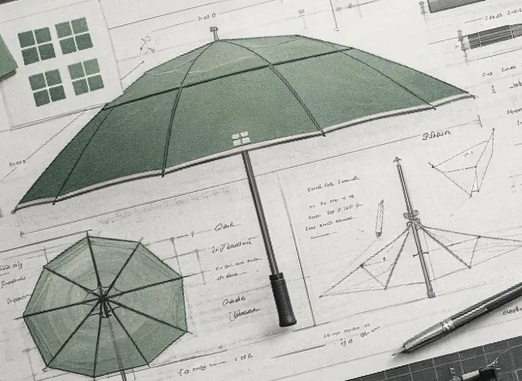
Why Do Some Umbrellas Survive Strong Wind While Others Don't?
If you've ever watched an umbrella flip inside out during a windy commute, you're not alone.
It's one of the most common frustrations during winter in Australia. One strong gust and suddenly your umbrella is upside down, impossible to close properly, or worse – permanently damaged.
So why do some umbrellas seem to survive strong winds while others don't?
The answer comes down to design, engineering and the way the umbrella is built.
It's Not Just About the Weather
Strong winds place enormous pressure on an umbrella canopy.
As the wind moves underneath the fabric, it creates upward force that can cause the umbrella to invert. This is perfectly normal physics and can happen with almost any umbrella under the right conditions.
The difference is how the umbrella responds once that pressure is applied.
The Importance of Umbrella Design
Many people searching for the best windproof umbrella in Australia assume the fabric is the most important feature.
In reality, the hidden frame does most of the work.
A well-designed frame distributes wind pressure evenly across the umbrella instead of concentrating it in one weak point. This allows the umbrella to flex naturally and continue performing in challenging conditions.
Thoughtful engineering is often what separates a quality umbrella from one that struggles in strong gusts.
Can an Umbrella Turn Inside Out and Still Be Fine?
Yes.
Many quality umbrellas are designed with flexibility in mind. If a sudden gust causes the canopy to invert, the umbrella may simply return to its original shape once the wind pressure is released.
This ability to recover without permanent damage is an important part of modern umbrella design.
Of course, extremely severe weather can damage any umbrella, but products engineered for durability are generally better equipped to handle everyday wind and rain.
Is There Really Such a Thing as a Windproof Umbrella?
The term "windproof umbrella" is often used to describe umbrellas that are specifically engineered to perform better in windy conditions.
No umbrella is completely immune to extreme weather, but quality design can make a significant difference to how an umbrella performs when the wind picks up.
If you're looking for a windproof umbrella in Australia, it's worth considering features such as durable construction, reliable frame design and wind-tested performance rather than simply choosing the lowest price.
Choosing the Right Umbrella
The best umbrella depends on how you use it.
Compact travel umbrellas are ideal for handbags, backpacks and carry-on luggage, offering convenience when you're on the go.
Larger everyday umbrellas and golf umbrellas often provide greater coverage and can offer increased stability thanks to their larger frame design, making them an excellent choice for people who regularly encounter windy conditions.
The Bottom Line
An umbrella should be something you can rely on when the weather changes unexpectedly.
While no umbrella is indestructible, thoughtful engineering and quality construction can make a remarkable difference to performance, durability and everyday reliability.
Whether you're commuting to work, travelling overseas or heading out for a weekend adventure, investing in a well-designed umbrella can help keep you protected when the forecast takes a turn.
After all, the best umbrella isn't just the one that fits in your bag—it's the one that's ready when you need it most.
Looking for an umbrella designed for Australian conditions? Explore the Weatherman Travel, Trek, Walk and Golf collections to find the right umbrella for your lifestyle.